
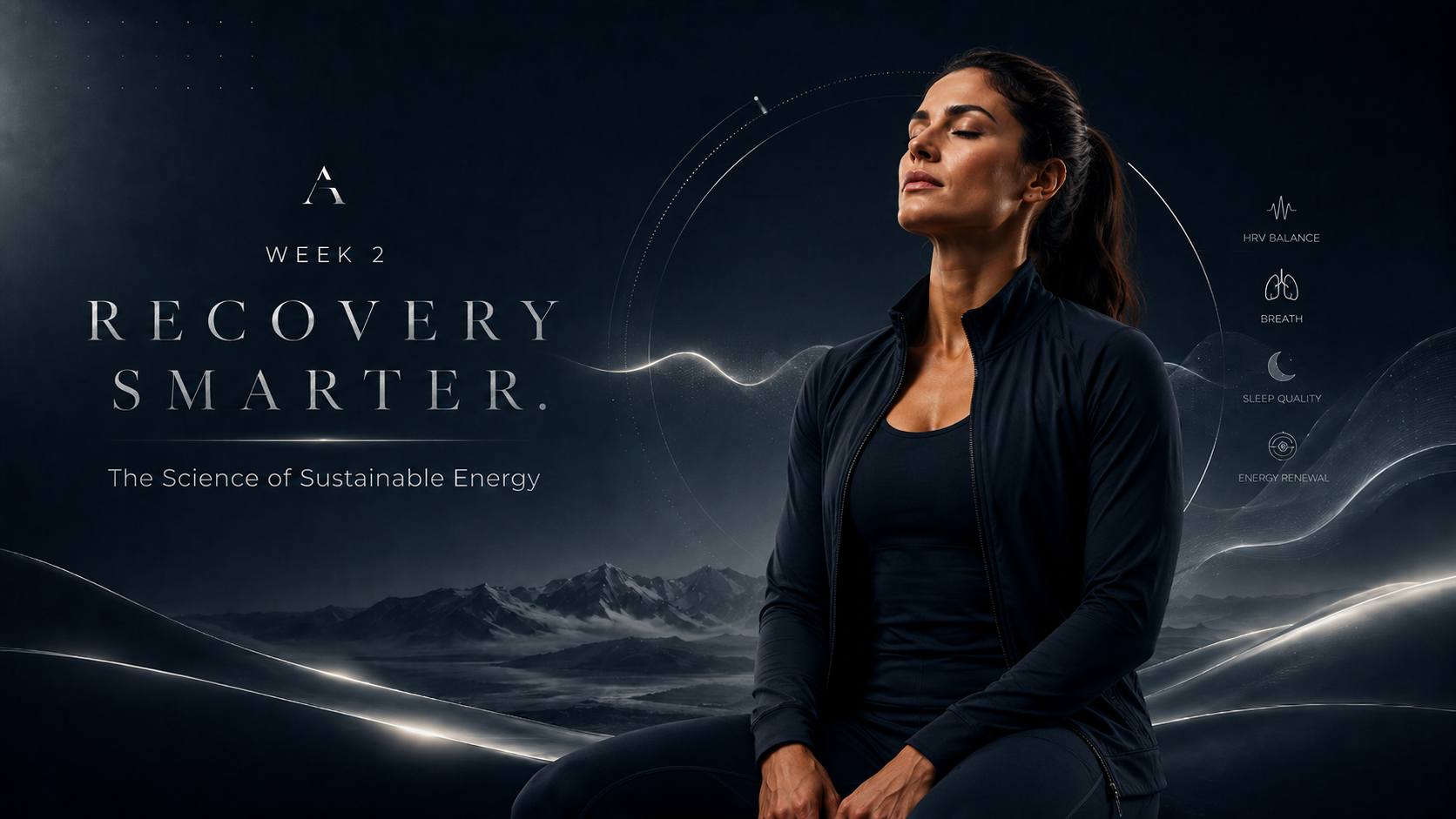
Why high performance is built between the efforts, not just during them
In a culture that celebrates grind, hustle, and constant output, recovery is often misunderstood.
Many people treat recovery as something they earn after exhaustion. They push hard, run themselves down, wait until the body forces them to stop, and then call that rest.
But true recovery is not collapse.
Recovery is strategy.
At Atlas Performance, we believe sustainable energy is not created by doing more. It is created by building a body, mind, and nervous system capable of producing power — and then restoring that power with intention.
The goal is not simply to work harder.
The goal is to recover smarter.
Energy Is Not Just Motivation
Most people think low energy is a mindset problem.
Sometimes it is. But often, low energy is a system problem.
Your energy is influenced by several connected systems:
Your nervous system.
Your sleep quality.
Your breathing patterns.
Your nutrition.
Your hydration.
Your movement habits.
Your stress load.
Your recovery rhythm.
When these systems are aligned, energy feels steady. You wake up clearer. You move better. You think faster. You respond instead of react. You can lead, train, create, parent, compete, and perform without constantly feeling like you are borrowing from tomorrow.
When these systems are ignored, energy becomes unstable. You rely more on caffeine, adrenaline, urgency, and willpower. Eventually, the body starts charging interest.
That is where burnout begins.
The Nervous System Is the Control Center
Recovery starts with understanding the nervous system.
Your body has a built-in performance switch. It can shift into a more activated state when you need focus, intensity, and action. It can also shift into a more restorative state when you need digestion, tissue repair, sleep, and calm.
The problem is not stress itself. Stress is part of growth.
The problem is getting stuck in stress.
Many high-performing professionals, parents, athletes, and leaders spend most of their day in a heightened state. They are answering messages, making decisions, managing pressure, solving problems, rushing between responsibilities, and living with constant mental tabs open.
The body interprets this as demand.
Over time, if there is no deliberate downshift, the system becomes overactive. Breathing gets shallow. Muscles stay tense. sleep gets lighter. Focus becomes scattered. Emotional patience shortens.
Smart recovery teaches the body how to come back down.
That is why breathwork, mobility, mindful movement, and sleep hygiene are not soft practices. They are performance tools.
Sleep Is the Foundation, Not the Bonus
If energy had a foundation, it would be sleep.
Sleep is when the body performs some of its most important work. Tissue repairs. Hormones regulate. The brain organizes information. The nervous system resets. Inflammation lowers. Decision-making capacity restores.
When sleep is poor, everything else costs more.
Training feels harder.
Cravings increase.
Patience decreases.
Stress feels heavier.
Recovery slows down.
Focus becomes harder to access.
You can still function on poor sleep, but functioning is not the same as performing.
At Atlas, we teach the concept of a rest ethic.
A work ethic helps you push.
A rest ethic helps you sustain.
The highest performers are not the ones who never stop. They are the ones who know how to cycle intensity and recovery with discipline.
Movement Is Recovery Medicine
Recovery does not always mean stillness.
Sometimes, the body recovers best through intelligent movement.
A walk.
A mobility flow.
A breath-led stretch session.
A light strength circuit.
A controlled core sequence.
A low-intensity bike ride.
Movement increases circulation, brings nutrients to tissue, supports joint health, improves mood, and helps the nervous system discharge stress. The key is knowing the difference between training that challenges the body and movement that restores it.
Not every session should be a test.
Some sessions are designed to build capacity.
Some are designed to restore alignment.
Some are designed to reconnect you with your body.
That is the science of sustainable energy: knowing what type of input your system needs today.
Breath Is the Fastest Reset Tool You Own
Your breath is one of the few systems in the body that is both automatic and controllable.
That makes it powerful.
When you slow your breathing down, extend your exhale, and breathe with more control, you send a signal to the nervous system: we are safe enough to regulate.
This does not erase stress. It changes your relationship to it.
A simple Atlas reset:
Inhale through the nose for 4 seconds.
Exhale slowly for 6 seconds.
Repeat for 2–3 minutes.
This small practice can help lower tension, improve focus, and create a pause between pressure and response.
For executives, athletes, and busy professionals, that pause matters.
A regulated person makes better decisions.
Fuel Determines Output
Recovery also depends on what you give the body to rebuild with.
You cannot expect sustainable energy from inconsistent nutrition, chronic under-eating, dehydration, or relying on sugar and caffeine to carry the day.
Food is not just calories. Food is information.
Protein supports muscle repair.
Carbohydrates support training, brain function, and energy output.
Healthy fats support hormones and cellular health.
Hydration supports circulation, joint function, temperature regulation, and mental clarity.
The body performs better when it has raw materials.
This is especially important for people who are training, leading, traveling, parenting, or operating under high stress. The higher the demand, the more intentional the fueling strategy must become.
Recovery Is a Daily Practice
The mistake many people make is waiting too long to recover.
They wait until the body is exhausted.
They wait until motivation disappears.
They wait until pain shows up.
They wait until sleep breaks down.
They wait until their energy crashes.
Smart recovery happens before the breakdown.
It is built into the day.
A few minutes of breathwork before a meeting.
A walk after lunch.
A mobility flow at the end of the workday.
A consistent bedtime routine.
A glass of water before more caffeine.
A training plan that includes restoration, not just intensity.
Recovery is not one grand event. It is a rhythm.
The Atlas Standard: Build Capacity, Protect Energy
At Atlas Performance, we do not view recovery as separate from performance. Recovery is part of the performance system.
The goal is to build a body that can produce strength, focus, presence, and resilience — without living in a constant state of depletion.
That requires five essentials:
Regulate the nervous system.
Activate the body through intelligent movement.
Center attention through mindful awareness.
Fuel the system with purpose.
Restore through sleep, rhythm, and recovery practices.
This is how sustainable energy is built.
Not through constant intensity.
Through intelligent repetition.
Final Thought
You do not need to earn recovery by destroying yourself first.
You need recovery because your goals matter.
Your body is not just a vehicle for work. It is the foundation of how you lead, think, move, serve, and live.
Recover smarter.
Train with intention.
Build energy that lasts.
Move with power. Lead with presence. Live with purpose.